
Henrik Carter · 7 September 2026
Decoding Shifts in Search Engine Behavior After Major Website Overhauls
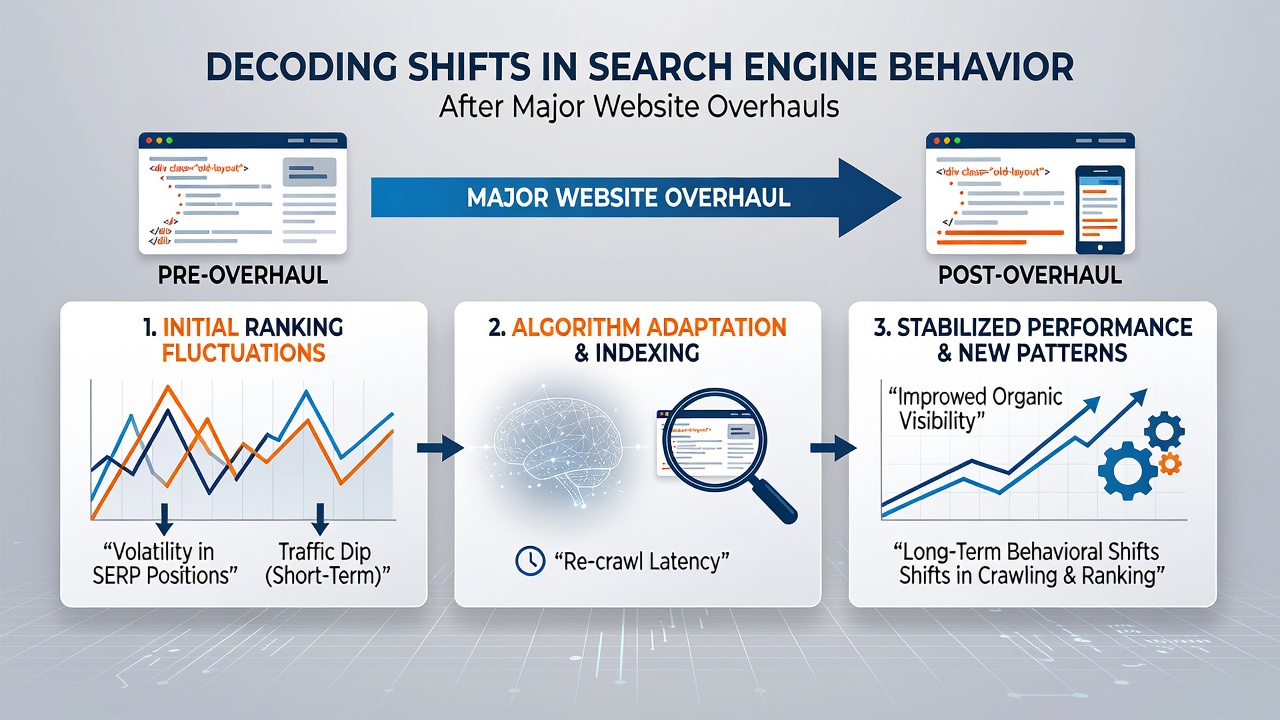
Major website overhauls prompt search engines to reassess site architecture, content signals, and technical elements, which produces measurable changes in crawling frequency, indexing depth, and ranking distributions according to multiple industry reports and observational data. These adjustments occur because crawlers detect structural modifications through updated sitemaps, altered internal linking, and fresh server responses, and data shows that recovery timelines vary based on the scale of the changes implemented.
Common Types of Overhauls and Their Technical Triggers
Website overhauls typically involve platform migrations, complete visual redesigns, content consolidation, or backend framework switches, and each category generates distinct signals that search engines process differently. Researchers tracking these events note that migrations from legacy systems to modern content management platforms often coincide with temporary drops in crawl rates as bots explore new URL patterns and redirect chains. Content consolidation projects reduce page counts while concentrating authority on fewer URLs, which leads to shifts in how search engines allocate indexing resources across the domain.
Technical triggers include changes to robots.txt directives, modifications in schema markup implementation, and updates to page speed metrics, all of which influence how quickly search engines reprocess the site. Observers note that sites undergoing simultaneous mobile optimization and security protocol upgrades experience compounded effects because multiple signals reach the algorithms at once.
Observed Changes in Crawling and Indexing Patterns
Search engines adjust crawl budgets after overhauls when they detect increased error rates or altered site hierarchies, and figures from monitoring tools reveal that daily crawl volumes can fluctuate by 30 to 60 percent during the initial weeks. New URL structures require fresh discovery cycles, while redirect implementations consume additional resources until the engines establish stable mapping between old and new addresses. Indexing rates often decline temporarily because algorithms prioritize verification of content originality and relevance before assigning stable index status.
Studies tracking post-overhaul periods indicate that sites introducing extensive JavaScript-rendered elements encounter slower indexing compared with those maintaining server-side rendering, since crawlers allocate additional processing time to execute and evaluate dynamic content. Data from September 2026 showed several enterprise migrations where indexing recovery extended beyond 90 days when combined with simultaneous core algorithm updates.
Ranking Distribution Adjustments
Ranking positions shift as search engines recalibrate authority signals following structural changes, and historical data sets demonstrate that pages moved during overhauls frequently experience volatility lasting four to twelve weeks. Internal link equity redistribution plays a central role because new navigation schemes alter how authority flows between sections, which affects which pages search engines deem most relevant for specific queries. External backlink profiles remain constant yet their influence on the revised site architecture produces different ranking outcomes.
According to documentation available through Google's official resources on search mechanics, engines evaluate freshness and comprehensiveness anew after large-scale updates, leading to temporary demotions for pages whose signals no longer align with previous patterns. European Commission analyses of digital platform behavior further highlight that such ranking recalibrations occur consistently across major search providers when sites undergo substantial technical revisions.
Factors That Influence the Extent of Behavioral Shifts
Several variables determine how pronounced the shifts become, including teh volume of redirected URLs, the quality of new internal linking, and the presence of duplicate content issues introduced during the overhaul. Sites that maintain comprehensive XML sitemaps and implement proper canonical tags experience faster stabilization because these elements assist search engines in mapping the revised structure efficiently. Server response time improvements or degradations also affect crawl frequency, since engines prioritize domains that deliver content reliably.
Those who have monitored multiple overhauls observe that phased rollouts, where sections migrate incrementally rather than all at once, tend to produce smaller disruptions because search engines process changes gradually. The timing relative to known algorithm updates further modulates outcomes, as evidenced by the amplified effects recorded during September 2026 when several major overhauls overlapped with broader ranking adjustments.
Analytical Methods Used to Track These Changes
Professionals employ log file analysis, ranking tracking tools, and index coverage reports to quantify shifts after overhauls, and these methods reveal precise patterns in how search engines allocate resources. Log files show which URLs receive visits and at what intervals, allowing identification of crawl budget changes, while index coverage reports highlight pages that drop from or enter the index during recovery phases. Comparative ranking data before and after the overhaul provides visibility into which content categories gain or lose prominence.
Combining these data sources enables reconstruction of the timeline of search engine adjustments, and researchers continue to refine these approaches as engines evolve their crawling and evaluation protocols.
Conclusion
Search engine behavior following major website overhauls follows predictable patterns rooted in how crawlers discover, evaluate, and rank revised structures, with data consistently showing temporary disruptions in crawling, indexing, and rankings that resolve over varying timeframes. Technical preparation, including careful redirect mapping and sitemap maintenance, correlates with smoother transitions according to available performance records. Continued monitoring remains essential as search algorithms incorporate new signals and as site owners implement increasingly complex technical changes.